View Pass Options


For many people living with Lipedema, one of the most confusing parts of researching treatment options is the word "liposuction." At first glance, it sounds like the same procedure used in cosmetic surgery — and that confusion can have serious consequences.
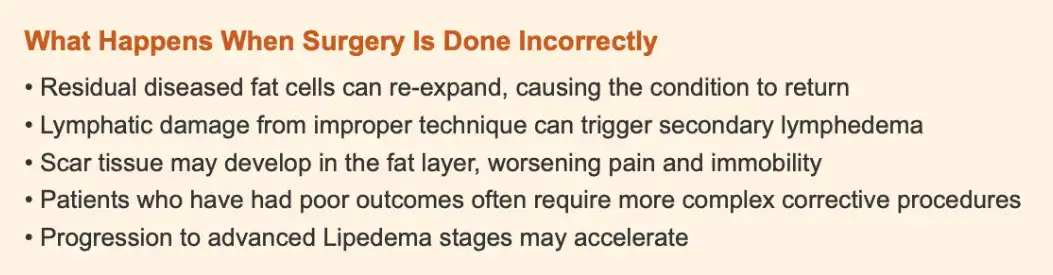
Lipedema liposuction is not cosmetic liposuction. The purpose, technique, and medical context are fundamentally different. And choosing the wrong type — or a surgeon unfamiliar with Lipedema — can cause diseased fat to return, disease progression to accelerate, and the lymphatic system to suffer lasting damage.
Lipedema is a chronic fat disorder that primarily affects women, causing a disproportionate buildup of abnormal fat — most commonly in the legs, hips, buttocks, and sometimes arms. Unlike regular body fat, Lipedema tissue has unique and serious characteristics:
• Painful or tender to the touch
• Completely resistant to diet and exercise
• Associated with inflammation and lymphatic strain
• Fibrotic — dense, nodular, and structurally different from normal fat
• Symmetrical on both sides of the body
Many patients spend years — sometimes decades — trying to lose this fat through lifestyle changes, only to discover that Lipedema is a medical condition, not a weight issue. Research suggests Lipedema may affect up to 11% of women, yet it remains widely underdiagnosed.
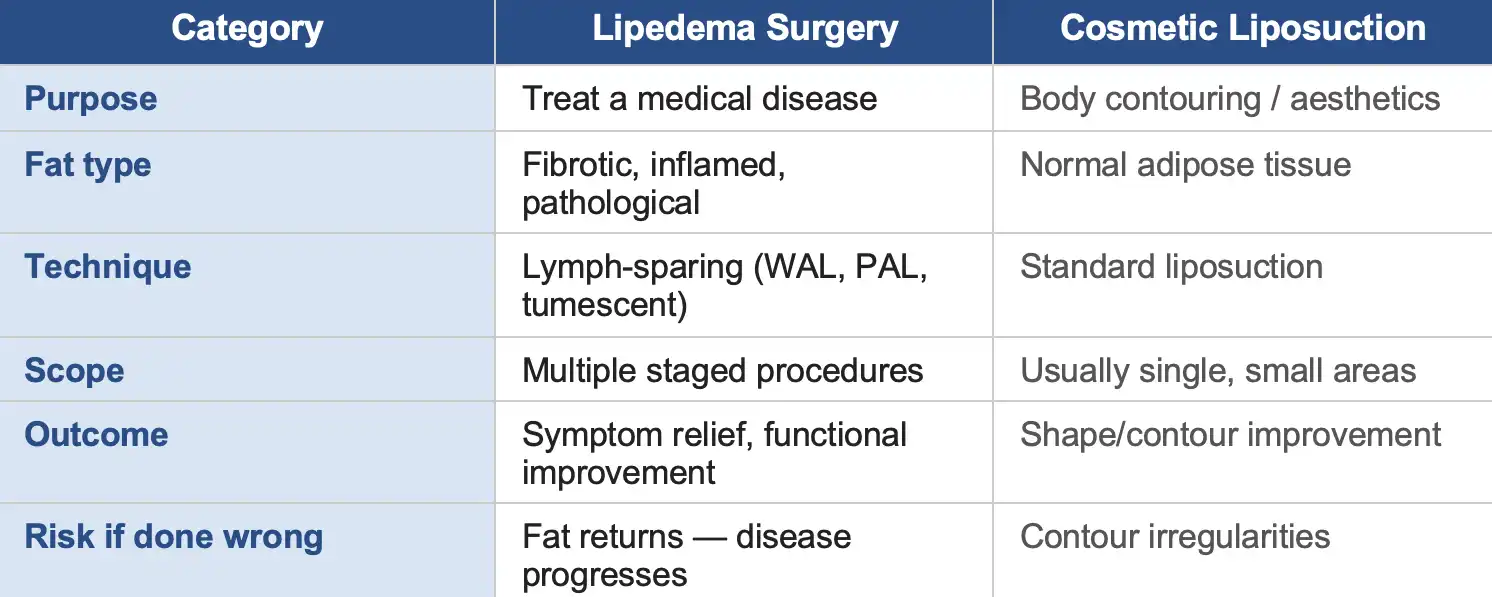
Although both procedures involve removing fat, the goals, techniques, and consequences of getting it wrong are worlds apart.
Lipedema Surgery
Lipedema liposuction is a medical treatment for a recognized disease. The goal is to remove pathological fat tissue that causes:
• Chronic pain and tenderness
• Progressive heaviness and immobility in the limbs
• Ongoing inflammation and lymphatic strain
• Accelerating disease progression
Surgery is typically pursued after conservative treatments — compression therapy, manual lymphatic drainage, and lifestyle support — have failed to control symptoms.
Cosmetic Liposuction
Aesthetic liposuction reshapes and contours the body. It targets normal fat deposits for appearance — not to treat a disease. Common cosmetic areas include the abdomen, love handles, chin, back, and thighs.
Why Lipedema Fat Is Different — And Why It Matters
Lipedema fat is not normal adipose tissue. It is fibrotic, inflamed, and structurally abnormal. This diseased tissue:
• Does not respond to caloric restriction or increased exercise
• Places continuous mechanical and inflammatory stress on surrounding lymphatic vessels
• Contains a denser, nodular matrix that requires specialized removal techniques
• Can progress to more advanced stages if left untreated or treated improperly
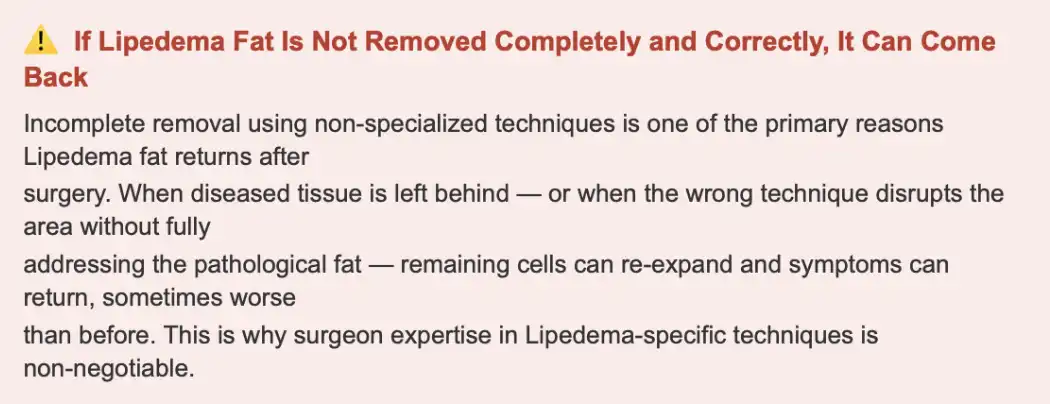
This is perhaps the most critical distinction. Lipedema surgery requires lymph-sparing techniques specifically designed to protect the delicate lymphatic vessels in affected areas. Damage to these vessels can trigger or worsen lymphedema — a permanent condition.
Techniques Used in Lipedema Surgery
• Tumescent liposuction — fluid infiltration to reduce trauma and bleeding
• Water-Assisted Liposuction (WAL) — gentle water-jet technology to loosen fat with minimal vessel damage
• Power-Assisted Liposuction (PAL) — mechanical cannula movement to address fibrotic tissue precisely
What Lipedema Surgeons Must Do Differently
• Actively identify and preserve lymphatic vessels throughout the procedure
• Remove diseased fat in careful, staged passes to minimize trauma
• Avoid aggressive or high-volume techniques that can scar lymphatic pathways
• Understand the unique density and distribution of Lipedema fat
Standard cosmetic liposuction does not require this level of lymphatic preservation — because it is not treating a lymphatic-involved disease. A cosmetic surgeon performing liposuction on a Lipedema patient without these precautions risks both incomplete treatment and lasting lymphatic damage.
Lipedema surgery is rarely a single procedure. Because the disease affects large, interconnected regions of the body, treatment typically requires multiple staged procedures:
• Lower legs (calves, ankles)
• Upper legs (inner and outer thighs)
• Hips and buttocks
• Arms (in many patients)
Each stage requires careful planning to protect healing lymphatic tissue from the previous procedure. Rushing or combining too many areas at once increases the risk of complications and reduces the chance of thorough fat removal.
Cosmetic liposuction, by contrast, is usually a single procedure targeting small, isolated areas. The entire treatment philosophy is different.
Goals of Lipedema Surgery
• Significant reduction in chronic pain and tenderness
• Improved mobility and reduced limb heaviness
• Slowing or halting disease progression
• Reduced lymphatic burden and risk of secondary lymphedema
• Improved quality of life and mental health
Lipedema surgery is not a cure. Many patients continue supportive therapies — compression garments, manual lymphatic drainage, and regular monitoring — to maintain results and manage the underlying condition. But surgery performed correctly can be transformative
Not all surgeons who offer liposuction are trained in Lipedema treatment. When evaluating potential surgeons, patients should ask:
• How many Lipedema patients have you treated?
• Which lymph-sparing techniques do you use?
• How do you stage procedures to protect the lymphatic system?
• What does your post-surgical compression and recovery protocol look like?
• Can you share outcomes data or connect me with past Lipedema patients?
A surgeon who conflates Lipedema surgery with cosmetic liposuction — or who does not account for lymphatic preservation — is not the right provider for this condition.
The 2026 Lipedema Summit takes place June 10–12, 2026, bringing together clinicians, researchers, surgeons, therapists, and patient advocates for three days of expert conversations and education.
The event is free to attend during the live broadcast, making it accessible to anyone seeking trustworthy information about Lipedema.
Register for the Lipedema Summit

We only send good emails. Unsubscribe anytime.













Lipedema Summit is produced by FullCircleMedia.co in collaboration with The Trail to Health and This Healthy Life Podcast.
Copyright © 2026 | Lipedema Summit. All rights reserved.